

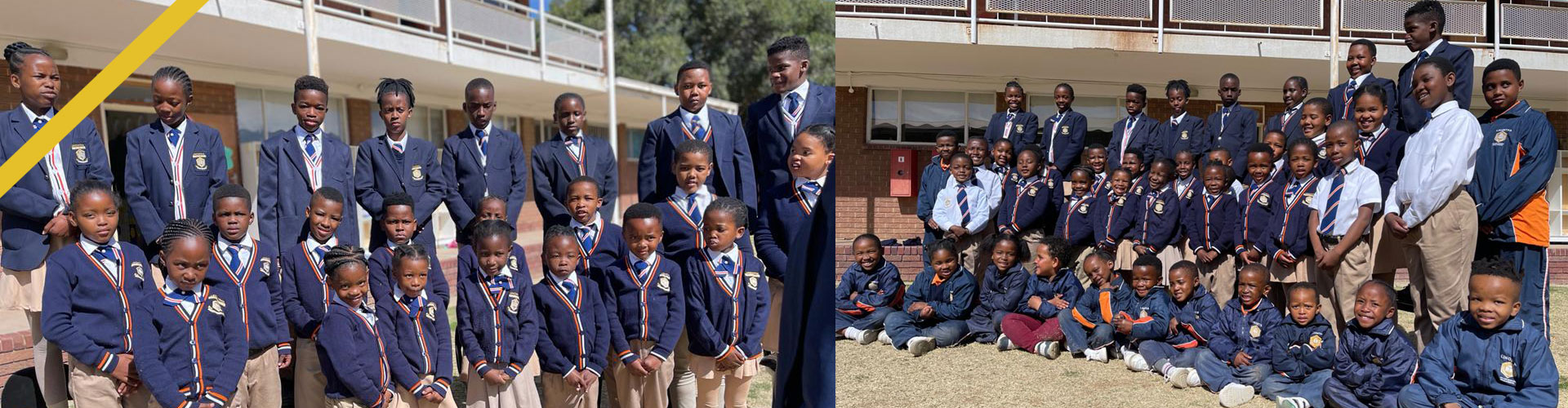
At our school, we have adopted a distinguished curriculum that separates us from a wide-array of our counterparts within the area in which operate. We have adopted Montessori as a vehicle with which we can assist our learners and staff members to stick to the mission and vision of our school while creating sustainable educational experiences.
Montessori is an international philosophy of education based on scientific approach and observation of how a child learns, it focuses on leaning through discovery and exploring, it equally focuses on hands-on learning and collaborative play. A Montessori education becomes an education for life, it nurtures each child’s individual strengths and interests while encouraging children to explore their world and to understand and respect the life forms, systems and forces of which it consists.
At Legsa children work in groups and individually. The groups are in line with the Montessori Vertical grouping (Mixed Ages) category. Traditionally, Montessori classes are grouped 0-3 year, 3-6 years, 6-9 years and 9-12 years. And this is how groups are divided:
Infant/Toddler Group - birth to three years (0 – 3) Elementary Group - six to twelve years (6 – 12),
The elementary group is subdivided into two: Lower Elementary - six to nine years (6 – 9) Upper Elementary - nine to twelve (9 -12)
Our school adheres to the following principles as prescribed by South African Montessori Association:
Principle 1: Our Montessori classes are mixed-age and non-graded. Mixed-age groups are not correlated to grades, nor are they divided in other ways according to achievement levels or normative standards.
Principle 2: Montessori schools accommodate an extended period of uninterrupted self-chosen activity – a period during which children can choose their own activity and work undisturbed for a minimum of three hours.
Principle 3: Rewards and Punishments are not used in a Montessori environment.
Principle 4: A prepared environment is a critical component of Montessori pedagogy. The prepared environment serves the developmental and pedagogical needs of the children as it supports freedom of movement, speech and association; Supports free choice of activity; Facilitates normalization (3-6), adaptation (6-12) and valorisation (12 – 18); Includes a full range of Montessori materials appropriate to the age for which it is prepared.
Principle 5: The adults in the Montessori environment exhibit and apply the principles of Montessori pedagogy through a disposition of respect and patience towards the child; An ability to balance the principle of non-intervention while at the same time not abandoning the child; Trust in Montessori principles, methodology and pedagogical aims; Seeing the role of the adult as primarily observer, scientist and interpreter of the environment rather than as a teacher in the conventional sense; Guiding the child to normalization and development appropriate to each Plane of Development.
Our Classroom.
Our classrooms are Montessori designed to be peaceful, happy places designed to meet the developmental needs of each child in every stage of life. The materials used in learning are designed to be self-correcting and at the same time ensuring that the children thrive on the activity involved with learning.